TeamSystem is an Italian software services company whose main target is financial advisors and companies, mostly in Italy, Spain, France, and other parts of Europe.
Midway upon the journey of my life in TeamSystem, I found myself within a new challenge. For this new journey, a pathway was found… or, to put it plainly, I got a new role. I was now responsible for managing communication and building bridges between designers and teams, anticipating problems, identifying hidden needs, and offering support. This all led to a new mission, code name: Rapture.
Client
ROLE
UX/UI DESIGNER - FACILITATOR
AWARDS
I HARDLY BELIEVE IT
CAFFEINE
+9999

The Challenge
What is Rapture: A comprehensive SaaS Suite for accountants, comprising multiple independent modules with separate teams, roadmaps, and goals, ideally working as one cohesive product experience.
I knew the project very well, I had the opportunity to work on two different modules in the past and from the inside I had a clear perception that while the suite aimed to offer a unified experience, the reality was far from it:
No shared team or ownership for the overall product
Different technologies (React, Angular) across modules
Fragmented communication
When I stepped into a cross-team role, my goal wasn’t to “fix” the product it was to address something more foundational: supporting designers in reconnecting, sharing context, and building towards a more aligned experience, without adding noise or process fatigue.
The Strategy
"Would I rather be feared or loved? Easy. Both. I want people to be afraid of how much they love me."
I approached this challenge as a design problem, starting from research and observation rather than assumptions.
1
Understand the real pain points
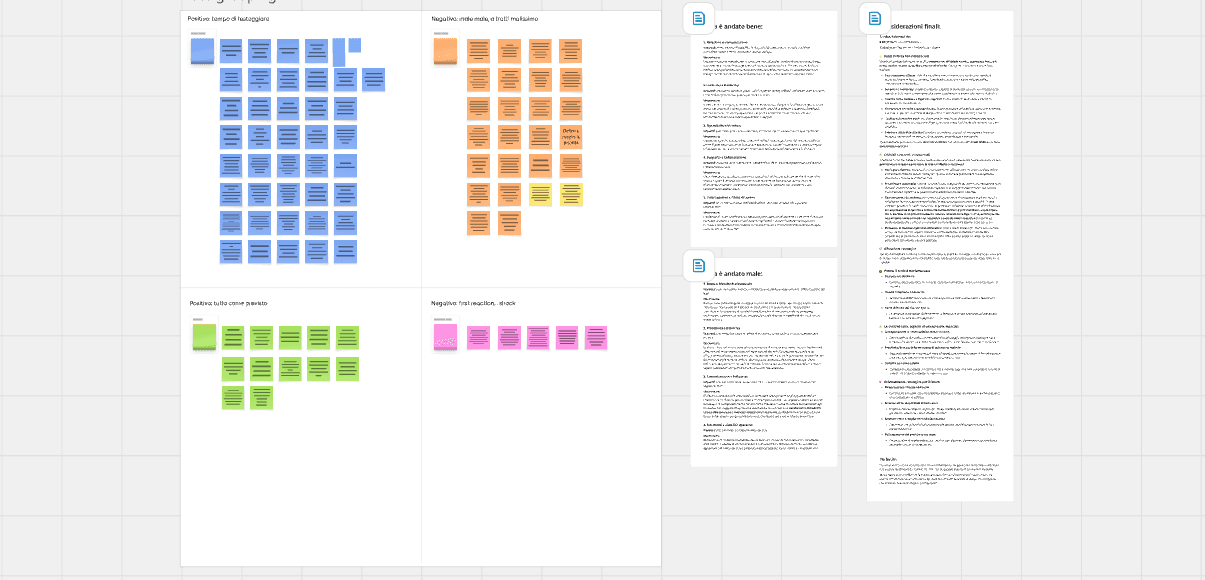
Through one-on-one conversations, I identified recurring blockers such as scattered communication channels, uncertainty around ownership, and inconsistent UX decisions.
2
Create space for healthy collaboration
Introduced lightweight routines like focused syncs, mood check-ins, and cross-module updates to make collaboration purposeful rather than procedural.
3
Be a point of clarity (then step aside)
Positioned myself as a first point of clarity for questions, then encouraged designers to connect directly with peers and stakeholders.
4
Use structure where it helps
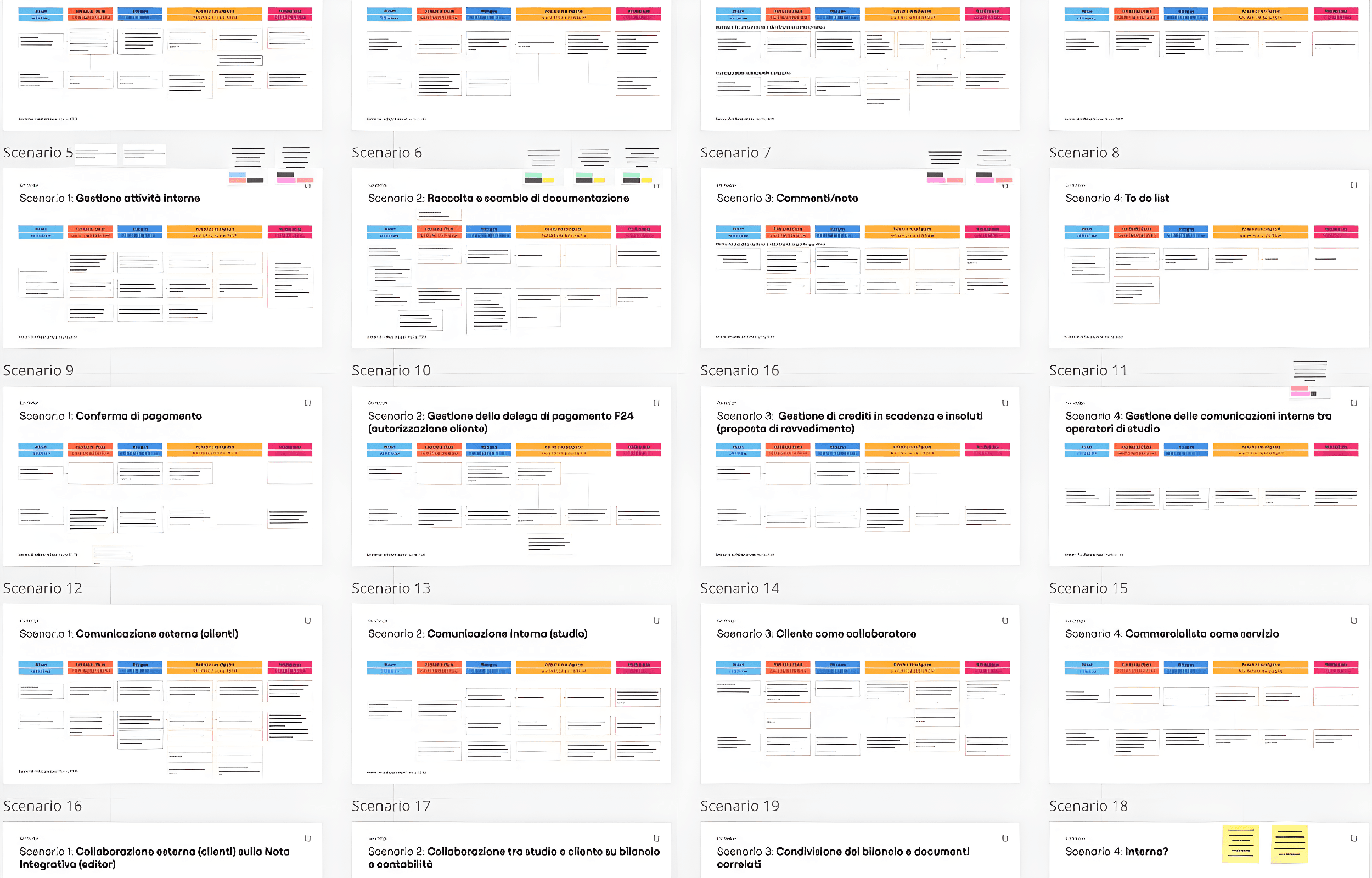
Used 5 Whys, OOUX, and Red Route Mapping to align modules on key user goals and feed into the suite’s navigation strategy.
The Outcomes
Cultural transformation that stuck
This project didn’t lead to a big reveal or a redesigned interface and that’s exactly the point.
It led to something more foundational: a gradual shift in how teams worked together.
Designers started to share context proactively, Cross-team conversations became more frequent and less guarded.
The communication practices I introduced, mood check-ins, focused syncs, shared rituals stuck, not because they were enforced, but because they were useful.
UX methods like OOUX and Red Route Mapping were adopted across modules to support decisions, not just to run workshops.
My role sat at the intersection of design ops and facilitation:
I helped reconnect people, structure conversations, and create a shared narrative across isolated teams.
Not by owning everything, but by designing the conditions where collaboration could actually happen.
This experience reaffirmed something I believe deeply: sometimes, what makes a difference isn’t a new tool or framework, it’s giving people space to trust each other again.
That’s the kind of design leadership I aim to bring: practical, human, and built to last.