Navigation System

Navigation System

Navigation System

LOST BOND

LOST BOND

LOST BOND

LOST BOND

LOST BOND

NO MAP

NO COMPASS

ONE DIRECTION

ONE DIRECTION

ONE DIRECTION

ONE DIRECTION

NO MAP

NO COMPASS

ONE DIRECTION

ONE DIRECTION

ONE DIRECTION

ONE DIRECTION

NO MAP

NO COMPASS

ONE DIRECTION

ONE DIRECTION

ONE DIRECTION

ONE DIRECTION

NO MAP

NO MAP

NO COMPASS

ONE DIRECTION

ONE DIRECTION

ONE DIRECTION

ONE DIRECTION

NO MAP

NO COMPASS

ONE DIRECTION

ONE DIRECTION

ONE DIRECTION

ONE DIRECTION

Why is everyone so surprised about this? This is a normal Tuesday.

Why is everyone so surprised about this? This is a normal Tuesday.

INTRO

INTRO

TeamSystem is an Italian software services company whose main target is financial advisors and companies, mostly in Italy, Spain, France, and a few other parts of Europe.

Midway upon the journey of my life in TeamSystem, I found myself…
oh wait, I already used that.

Anyway, we’re still talking about code name Rapture.
But this time, from a more operative point of view.

Client

TEAMSYSTEM (AGAIN)

TEAMSYSTEM (AGAIN)

TeamSystem

TEAMSYSTEM (AGAIN)
Role
ACTIVITIES

UX/UI DESIGNER - FACILITATOR

UX/UI DESIGN

AWARDS

MAYBE SOMETHING NOT TOO FANCY

CURRENT

Live Project
CAFFEINE

NOTHING YET

+9999

Feedback session organaized with the design team and POs
The Challenge

What is Rapture: A comprehensive SaaS Suite for accountants, comprising multiple independent modules with separate teams, roadmaps, and goals, ideally working as one cohesive product experience.
Rapture, is not your typical enterprise product.
It’s a commercial suite made of independent modules, each owned by a different team, each with its own roadmap, logic, and just to spice things up, and different tech stack (React on one side, Angular on the other).

Now imagine trying to build a coherent user experience across this Frankenstein of systems. There was no navigation. No sense of flow.
Just loading screens, disconnected behaviors, terrible iframes, and a vague hope that users would "figure it out."

The underlying issue wasn’t just technical, it was cultural:
Years of siloed development, confused ownership of the suite, and a lack of structure to connect the dots.

My role? Find a way to bring narrative and coherence into the system.
And do it without breaking it, or breaking anyone.

Rapture, is not your typical enterprise product.
It’s a commercial suite made of independent modules, each owned by a different team, each with its own roadmap, logic, and just to spice things up, and different tech stack (React on one side, Angular on the other). Designing a coherent user experience in this context meant overcoming both technical and organizational complexity.
There was no unified navigation model, making it difficult for users to move seamlessly between modules or understand the system as a whole.
The root causes were as much cultural as technical: siloed development, unclear ownership of the suite, and no established structure to connect the dots.

My role was to bring narrative and coherence to this fragmented ecosystem — creating a navigation approach that respected each module’s autonomy while helping the suite feel like a single product.

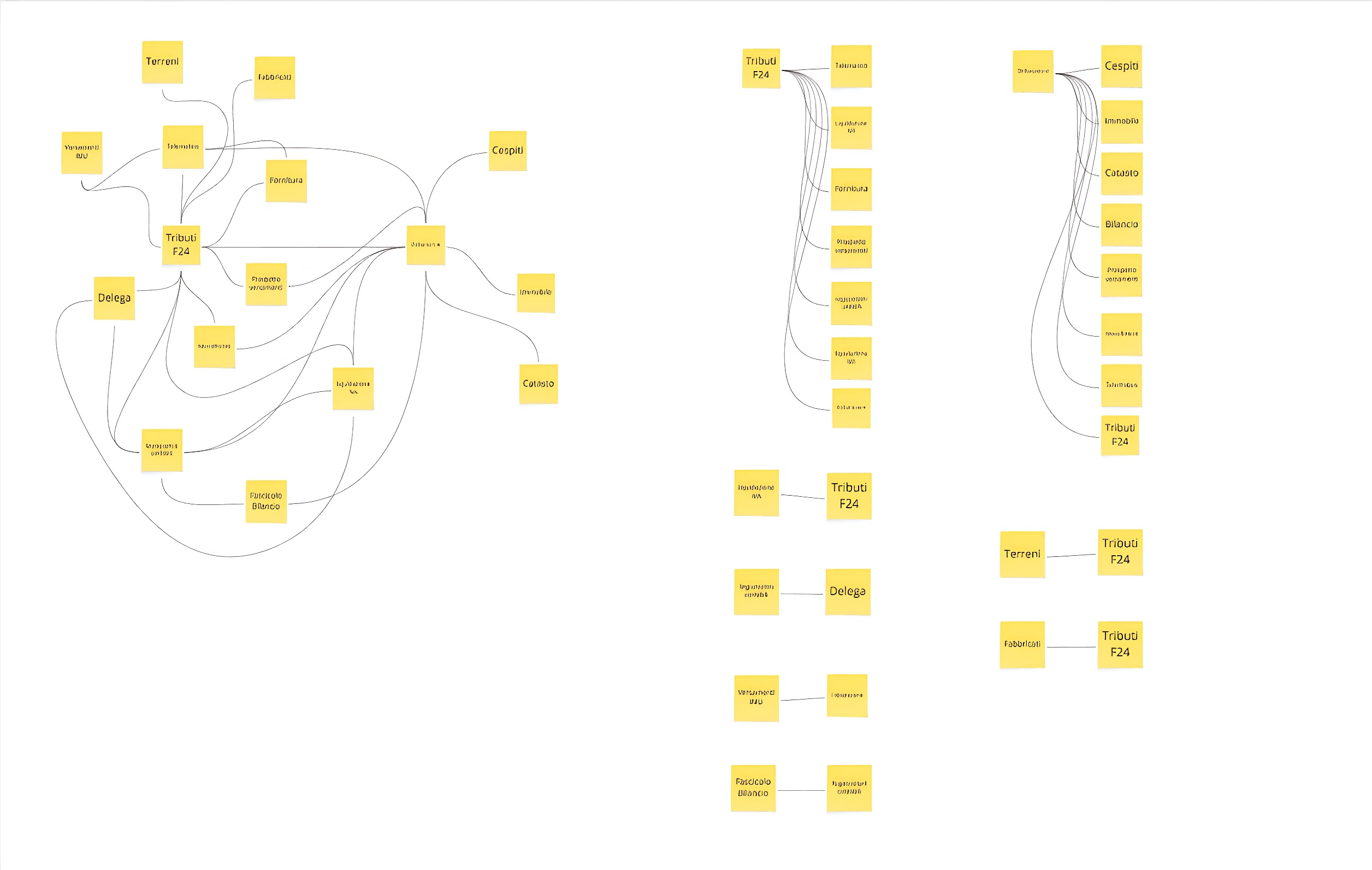
OOUX session organaized with designers and POs
The Strategy
"Would I rather be feared or loved? Easy. Both. I want people to be afraid of how much they love me."

This was one of those cases where the biggest risk was pretending it was “just a navigation issue.”
It wasn’t, so approached this as a design problem, starting with listening and observation:

1

Understanding the pain points

OOUX Workshops

Through one-on-one conversations, I identified recurring blockers such as scattered communication channels, uncertainty around ownership, and inconsistent UX decisions.

  • Ran Object-Oriented UX workshops with each team.

  • Mapped the core objects in each module, their relationships, and the user actions connected to them.

  • This object-based model gave us a foundation for understanding how users expected to move between parts of the suite.

2

Creating space for collaboration

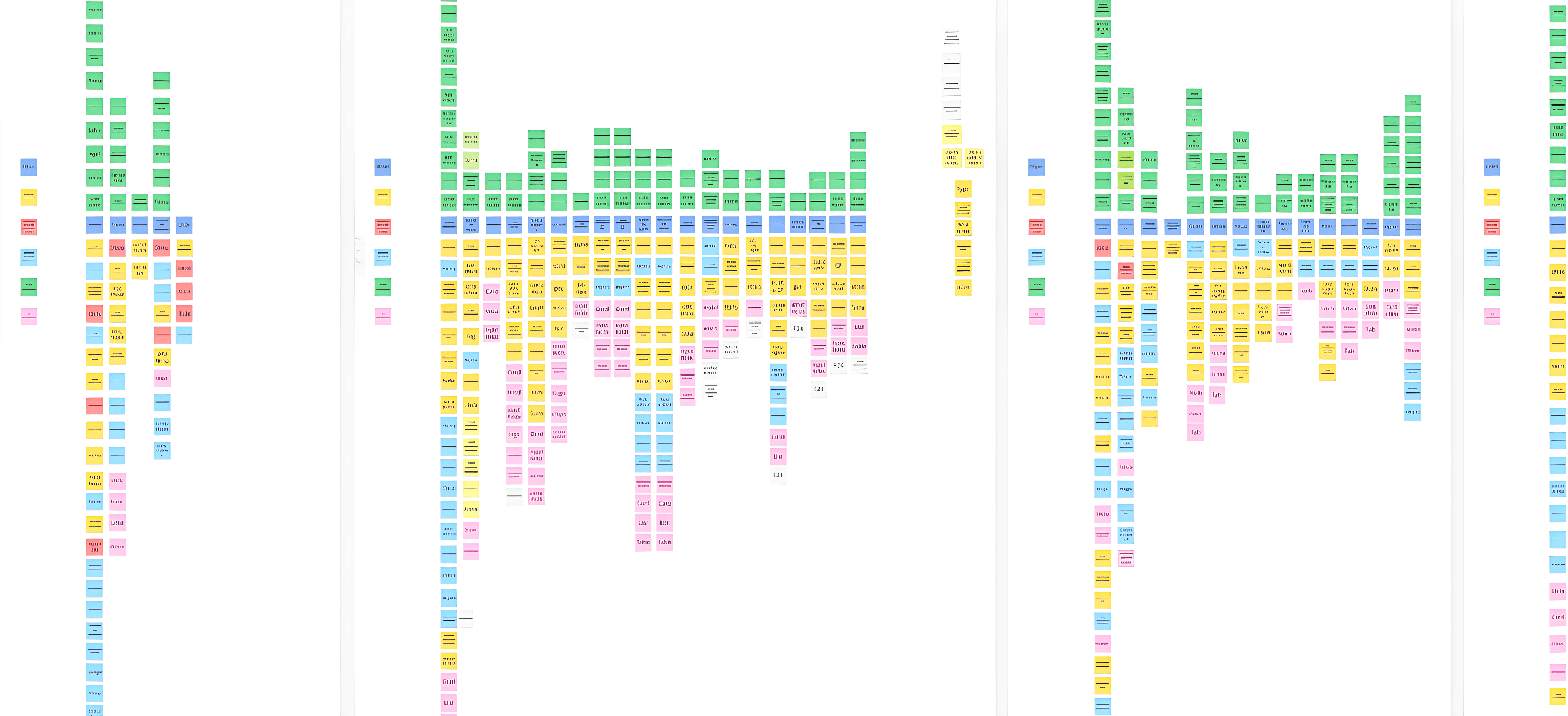
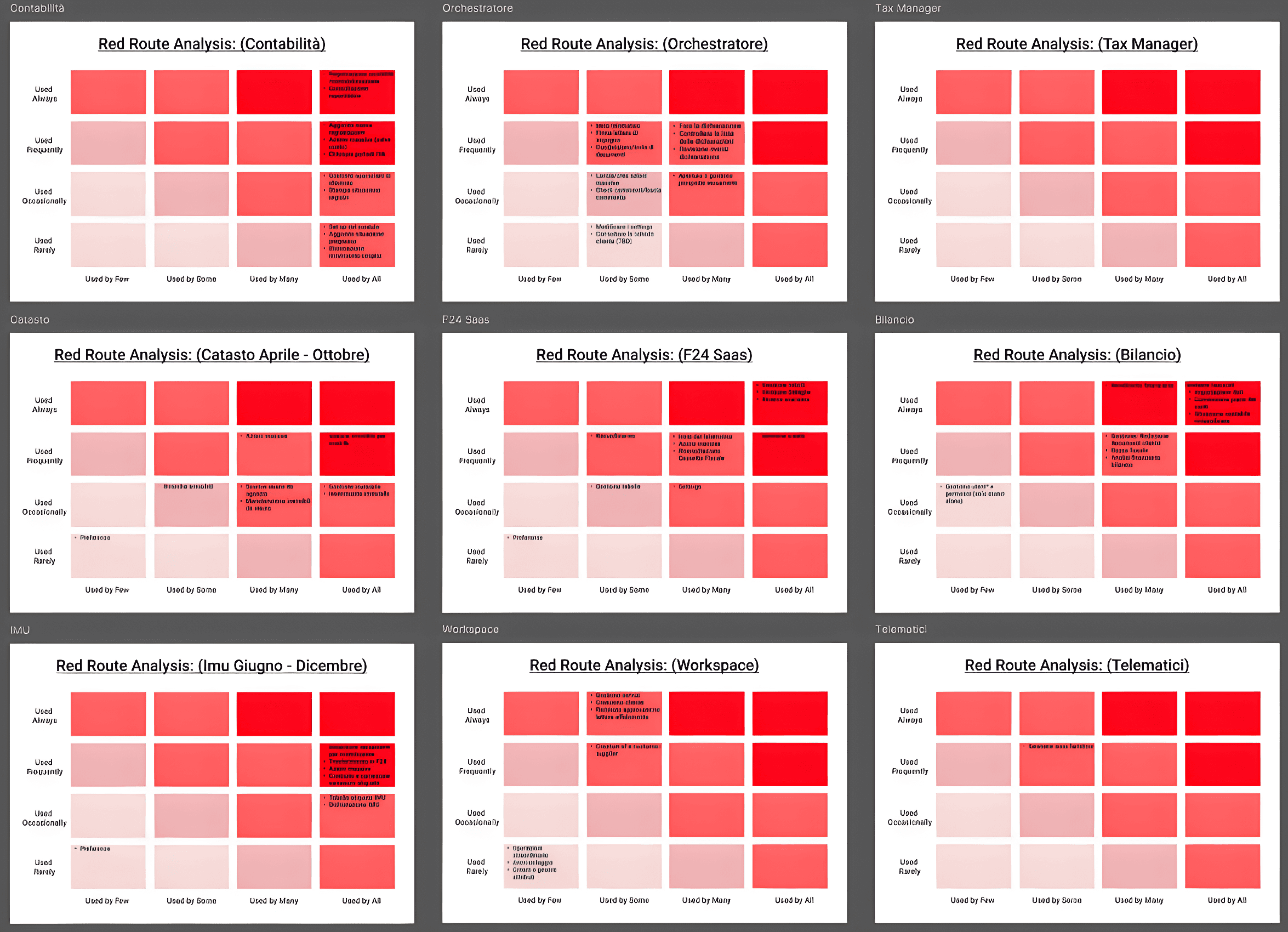
Red Route Mapping

Introduced lightweight routines like focused syncs, mood check-ins, and cross-module updates to make collaboration purposeful rather than procedural.

  • Facilitated cross-team sessions to identify high-priority tasks, their frequency, and their impact.

  • Linked each task to one or more objects, allowing us to prioritize navigation paths based on what mattered most to users.

3

Building confidence

Patterns Mapping

I audited both internal navigation system (other TeamSystem products) and external SaaS benchmarks.
The goal: understand how users expect to navigate in tools like this and see where we were completely off-track.

This gave us a path to start cleaning up, not by copying, but by making smarter choices based on expectations.

  • Audited internal navigation patterns (across other TeamSystem products) and external SaaS benchmarks.

  • Identified where user expectations aligned with our current flows and where they diverged, providing a basis for pattern selection and improvement.

Bonus Round: Let’s talk to other humans

Parallel to the architecture work, I opened two critical conversations:

Bonus Round: Parallel workstreams "Let’s talk to other humans", I opened two critical conversations:

Design System Team to define which patterns and components we could actually use. They are the final decision-makers, our sacred guardians of logic and consistency.

UX Research Team to validate if our model of the system made sense for other people.
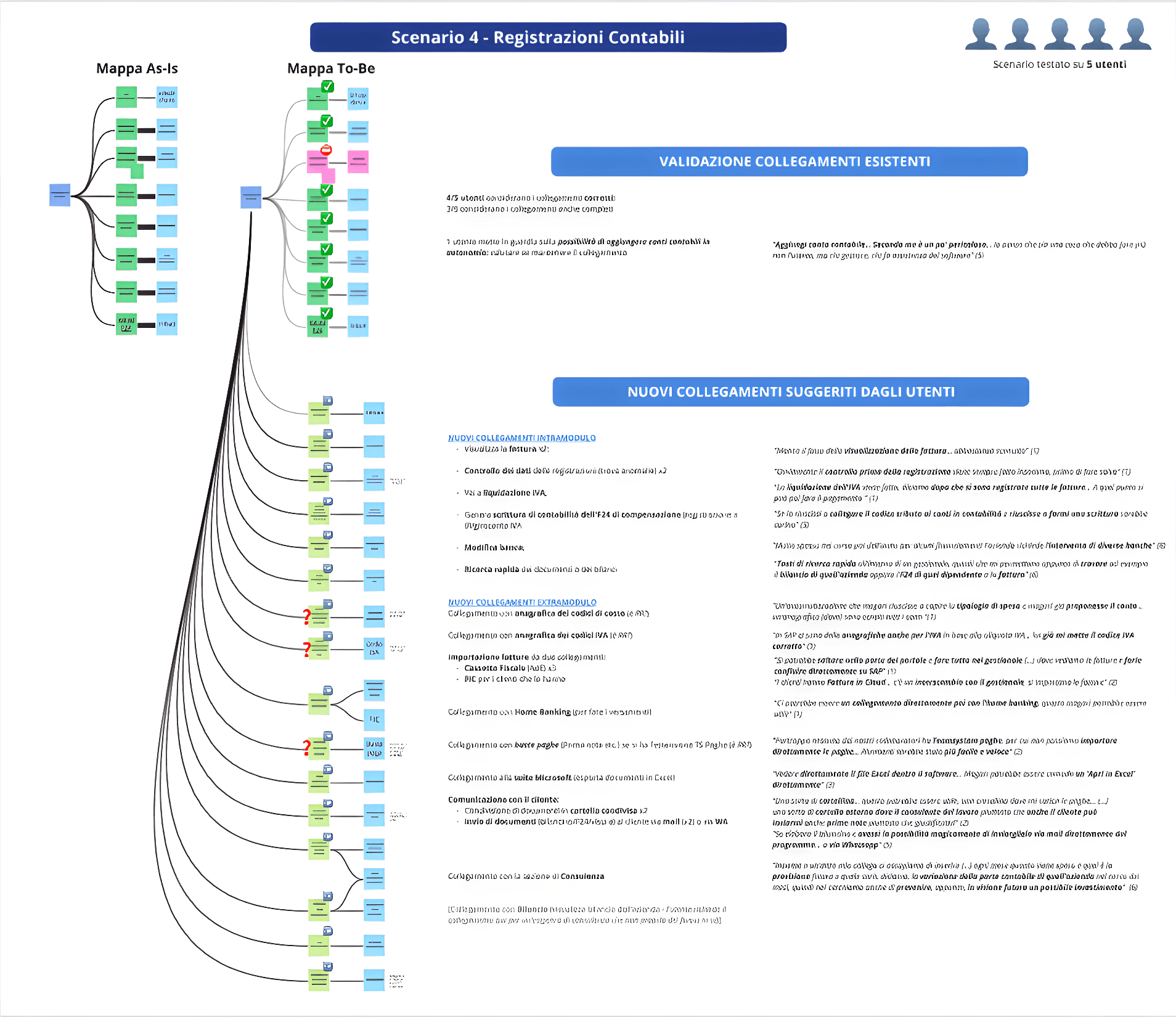
Do users recognize the objects? Do the flows feel natural? Do the connections hold up in context?

Only through this validation could we feel confident we weren’t just designing for the system, but also for the people using it.
The Result
Cultural transformation that stuck

I won’t pretend that Rapture now has a flawless, elegant navigation and everyone’s holding hands. It’s not done, it’s not perfect.
Some days, I still wonder if it’ll ever reach the next phase, but something important did happen: we mapped a shared foundation, we created a common vocabulary, we engaged the right teams at the right time and we gave the product a sense of direction, for the first time in… well, maybe ever.

This work aligned teams, brought product owners to the table, and gave designers a way to design in context, not in isolation.


This wasn’t just a “navigation job", it was design facilitation, systems thinking, and a lot of negotiation with silos and legacy constraints.

My job wasn’t to impose a vision, it was to build one together, to hold the narrative thread in a fragmented system.
To give form and direction, even when things were technically messy and politically… let’s say delicate. It’s still a work in progress, but now we have a map, and when you’re building inside a maze, a map is everythyng.

DEESY

ITALY

©2025 design

DEESY

ITALY

©2025 design

DEESY

ITALY

©2025 design

DEESY

ITALY

©2025 design

DEESY

ITALY

©2025 design

DEESY

ITALY

©2025 design

Create a free website with Framer, the website builder loved by startups, designers and agencies.